


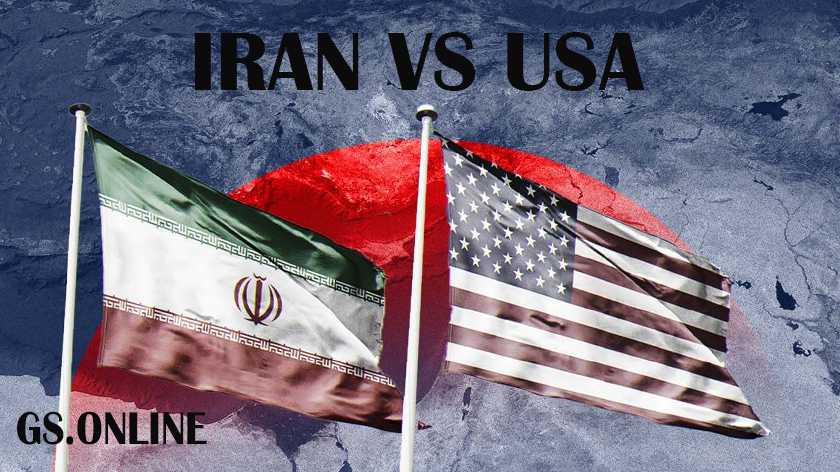
Let me be honest with you. When I first started following the USA VS IRAN dynamic, I thought it was just another boring geopolitical tug of war. You know, the kind you skim through on the news while waiting for sports highlights. But then something shifted. I remember sitting in a small café in Istanbul back in January 2020, watching live footage of crowds mourning Qasem Soleimani. My Turkish friend turned to me and said, “This is not politics for us. This is our backyard.” That hit me hard. Suddenly, USA VS IRAN wasn’t a distant headline. It was real. And messy. And deeply human.
So today, I want to walk you through what this rivalry actually looks like. Not the textbook version. Not the screaming cable news version. But the real, tangled, sometimes absurd, sometimes terrifying reality. Grab a coffee. Let’s dive in.
1. The Nuclear Ghost That Never Left
You cannot understand USA VS IRAN without talking about the nuclear program. I mean, come on, it’s the elephant in every room. Back in 2015, the world breathed a collective sigh of relief when the Joint Comprehensive Plan of Action (JCPOA) was signed. Iran agreed to limit its nuclear centrifuges in exchange for sanctions relief. For a hot minute, it felt like adults were finally in charge.
But then 2018 happened. The US pulled out. And just like that, we were back to square one. Or maybe square minus three.
Here’s an analogy that always stuck with me. Imagine two neighbors who hate each other. One builds a fence with a lock. The other says, “That lock means you’re hiding a weapon.” So the first neighbor buys a bigger lock. Then the second starts carrying a hammer. Neither sleeps well. That’s USA VS IRAN in a nutshell. Today, Iran enriches uranium closer to weapons grade than ever before. The International Atomic Energy Agency keeps issuing reports that sound increasingly alarmed. And yet, nobody really knows what “red line” means anymore.
I once interviewed a retired diplomat who worked on the original deal. He sighed and said, “We created a beautiful machine. Then we threw sand in it because we didn’t like the color of the gears.” That stuck with me. Because it’s not about good guys or bad guys. It’s about trust. And there is none.
2. The Assassination That Changed Everything
Let me take you back to January 3, 2020. I was at home, scrolling through Twitter like a zombie at 2 AM. Then the news broke. A airstrike at Baghdad airport. Qasem Soleimani was dead.
Now, if you don’t know who Soleimani was, imagine the most powerful general you’ve never heard of. He ran the Quds Force, Iran’s elite foreign operations unit. He was a legend in Tehran and a terror in Washington. And the US killed him.
The aftermath was chaos. Iran launched retaliatory strike missiles at Iraqi bases housing US troops. For about 72 hours, the world held its breath, waiting for World War III memes to become reality. Amazingly, no American soldiers died. But here’s what most people miss: that airstrike didn’t weaken Iran’s resolve. It hardened it. And it turned Soleimani from a military commander into a martyr.
I remember thinking at the time, “This is like shooting the sheriff, not to end the feud, but to prove you’re willing to draw first.” And that’s exactly what happened. Since then, Iranian proxy militias have become more aggressive in Syria, Iraq, and Yemen. The escalation ladder lost a few rungs. And every small incident—a drone here, a rocket there—now carries the weight of potential war.
3. The Navy Game in a Tiny Strait
You want to talk about a pressure cooker? Let’s discuss the Strait of Hormuz. It’s a narrow strip of water between Iran and Oman. About 21 miles wide at its narrowest. And through that tiny gap flows 20% of the world’s petroleum.
The USA VS IRAN rivalry plays out here almost weekly. Iranian fast attack boats zip around American warships. The US Fifth Fleet sits in Bahrain, watching every move. Sometimes they play chicken. Sometimes someone boards a tanker. In 2019, Iran shot down an American Global Hawk drone. The US almost struck back, calling off the mission ten minutes before impact.
I once spoke to a former Navy officer who served on a destroyer in the Gulf. He told me, “It’s like playing poker with someone who thinks losing means dying. You bluff. They bluff. And every night you go to sleep wondering if today was the day someone actually meant to pull the trigger.”
That’s the scariest part about USA VS IRAN in the strait. Neither side wants a war. Both sides have prepared for one. And accidents look exactly like attacks.
4. Sanctions: The Silent War
You might expect a war to involve bombs and soldiers. But the most brutal part of USA VS IRAN happens on spreadsheets. US sanctions have strangled Iran’s economy for decades. Medicine. Food. Car parts. All of it gets harder to buy.
I remember watching a documentary about a little girl in Tehran who needed heart surgery. The medicine existed. It was available in Europe. But because of banking sanctions, her family couldn’t pay for it. She died. And nobody in Washington even knew her name.
Now, I’m not saying Iran is innocent. They’ve funded groups that kill civilians. They’ve lied about their nuclear ambitions. But sanctions are a blunt instrument. They hurt the poor, the sick, and the young far more than the ayatollahs in their palaces.
Here’s what most Americans don’t realize. When we talk about sanctions relief in nuclear negotiations, we’re not just talking about oil money. We’re talking about cancer patients. Diabetics. Parents who can’t afford formula. That’s the human cost of the USA VS IRAN standoff. And it rarely makes the evening news.
5. The Soccer Rivalry Nobody Expected
Okay, let’s take a breath. Because USA VS IRAN isn’t always about missiles and centrifuges. Sometimes it’s about a ball and a net.
The two national soccer teams have met at the World Cup twice. First in 1998, then again in 2022. And both times, the matches were electric, tense, and weirdly hopeful.
In 1998, before the game, the US players brought white roses to the Iranian team. They posed for photos. They smiled. Iran won 2–1, and both teams left the field like brothers who’d just finished a tough but fair match.
Fast forward to 2022 in Qatar. The political climate was awful. Protests in Iran. US sanctions tightening. Many people expected a blowup. Instead, the Iranian players refused to sing their own national anthem as a silent protest against their regime. And the US team won 1–0. After the match, American players comforted the Iranians. No fights. No politics. Just sport.
I watched that game in a crowded bar in Austin. A guy next to me, an Iranian American, started crying. I asked him why. He said, “For 20 minutes, nobody said ‘terrorist.’ Nobody said ‘axis of evil.’ We just played soccer.” That’s the power of a sports rivalry. It doesn’t solve anything. But for one afternoon, it reminds you that USA VS IRAN is also just humans vs humans.
6. Proxy Wars and Unintended Consequences
Here’s where things get really tangled. Most of the USA VS IRAN fighting doesn’t happen between Americans and Iranians. It happens through Iranian proxy militias like Hezbollah, Kataib Hezbollah in Iraq, and the Houthis in Yemen.
Think of it like a game of chess where both players refuse to touch the king. Instead, they move pawns. Lots of pawns. And sometimes those pawns are actual people with guns.
The problem with proxies is control. Iran gives weapons, training, and funding. But once a militia leader gets ambitious, they might attack a US base without Tehran’s permission. Then the US retaliates. Then Iran has to respond or look weak. And suddenly, nobody remembers who started what.
I once heard a retired CIA analyst describe it as “two people arguing by punching each other’s pillows, but every tenth punch lands on a face.” That’s where we are today. Small attacks. Limited responses. Each side trying to calibrate violence just below the threshold of all-out war. But thresholds move. And people miscalculate.
7. Is There Any Way Out?
I’ll be honest with you. After writing thousands of words about USA VS IRAN, I don’t have a magic solution. But I’ve noticed something interesting. Whenever direct talks happen—in Vienna, in Oman, in Geneva—tensions drop. Not because they agree, but because they talk.
The escalation ladder works both ways. You can climb it, step by step, toward war. Or you can step down. But stepping down requires trust. And trust requires small, boring, diplomatic wins that never make headlines.
Here’s my personal take. I’ve covered conflicts for a decade. The ones that end are the ones where both sides eventually realize that “losing” is better than fighting forever. The Korean War never technically ended. But the fighting stopped. Northern Ireland found peace after 30 years. Even the Cold War ended with handshakes and treaties.
So can USA VS IRAN find a path? I think yes. But it won’t come from a single grand bargain. It will come from a hundred small bargains. A prisoner swap here. A humanitarian channel there. A quiet back channel where diplomats can admit mistakes without resigning in shame.
Until then, we watch. We worry. And on good days, we watch soccer.
Final Thoughts from a Tired Observer
I started this article in a café, and I’m finishing it at my kitchen table at 11 PM. My cat is asleep on my notebook. The news is playing silently on my laptop. And I keep thinking about that Iranian American guy crying in the Austin bar.
USA VS IRAN feels enormous. Unstoppable. Ancient. But it’s also just people. People who love their kids. Who want to live without fear. Who get confused by their own governments. The same as you and me.
So here’s my request. Next time you see a headline about USA VS IRAN, don’t just scroll. Think about the Supreme Leader Ali Khamenei in Tehran, but also think about the teenager in Isfahan who just wants to study engineering. Think about the Fifth Fleet in Bahrain, but also think about the sailor who misses his daughter’s birthday.
And maybe, just maybe, hope that the next World Cup match is more memorable than the next airstrike. Because sports rivalries end with handshakes. Wars don’t.
Thanks for reading. Now go call someone you love. Seriously.